I put it together to answer the questions I got over a period of years asking me:
- How did remote viewing get started?
- How do I do remote viewing?
- What can I accomplish with remote viewing?
- What does it do to you as a person?
- What can you learn from it?
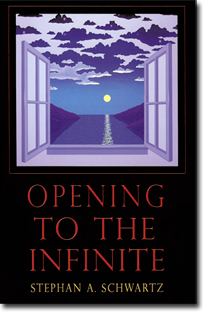 The Online Gold Standard Course includes 10 Streaming Videos, 5 Audio Recordings, and my book, Opening to the Infinite. By the time you have finished this program, you will know everything science knows about remote viewing, and you will have been carefully and gently guided through a series of experiences so that you will understand this aspect of your consciousness that is not limited by space-time. And although I can not guarantee it, it would not surprise me if you become as proficient in remote viewing as the people who worked in my Mobius laboratory. These are the men and women, much like you, who discovered sunken ships in the Caribbean and California. Who located Cleopatra’s Palace, Mark Antony’s Timonium, and the ruins of the Lighthouse of Pharos one of the Seven Wonders of the ancient world.
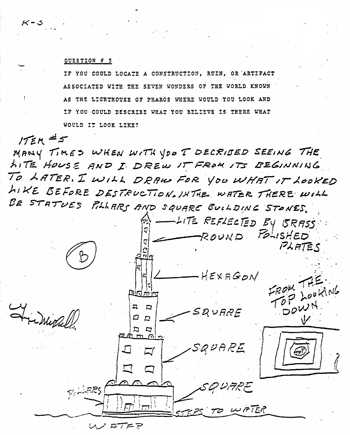
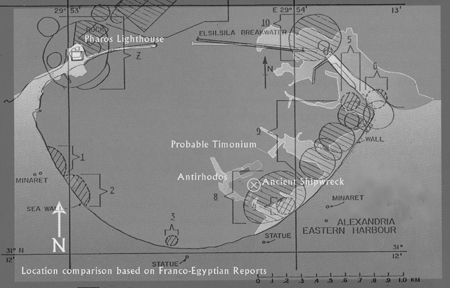
Hand drawn map showing remote viewing locations, overlaying map based on excavation fieldwork.
Using the techniques described in this course people much like you have solved crimes, and guided an investment program that tripled its money in less than a year. The 10 Videos, each about 45 minutes in length, introduce you to every aspect of remote viewing. The audio recordings, 4 of them, guide you through the experiences so that will know what it feels like to open to the part of yourself that is nonlocal. Although they can be used with no reference to Opening to the Infinite, the Albums are specifically designed to get you started doing the actual techniques described in the book. I have tried to make your experience the same as it would have been if you had come to the Mobius lab and worked on say, a project to locate an archaeological site. Through these techniques of remote viewing, you will be in contact with that part of yourself not limited by space or time. You will open yourself to an aspect of your own consciousness, that most people hardly know exists.
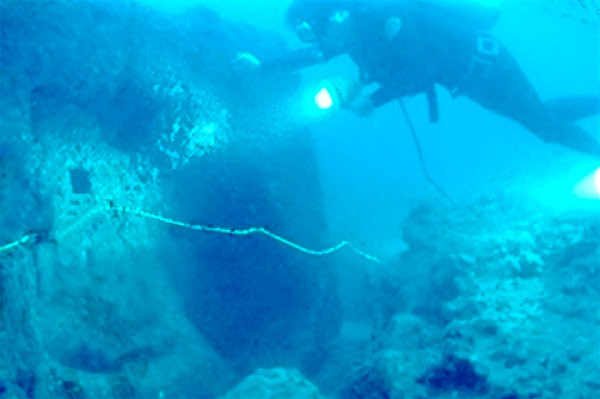
One of the large blocks making up the underwater ruins of the Lighthouse of Pharos, just as described by the remote viewers before we got to Egypt.
But what really completes the course is the book, Opening to the Infinite. I wrote this book as a manual of remote viewing. It is the complement to the videos and recordings, and is designed to be used with them, and will give you even more information and will walk you, step-by-step, through all the remote viewing protocols showing you exactly how to have these experiences. Using the same program they did you may become as proficient as the people that worked with me at the Mobius Laboratories or worked in the SRI/SAIC and Stargate programs. I am quite serious about this.
What Other Experts on Remote Viewing Have to Say
“This important book, Opening to the Infinite, written by an experienced and thoughtful Remote Viewing researcher and teacher presents exciting experiments that have never before been published. It goes far beyond popular descriptions of psychic abilities. Based on his three decades of research, Schwartz presents comprehensive information on the most successful physical and psychological approaches discovered in the laboratory to increase accuracy and reliability of remote viewing. From concerns about time-of-day and solar activity, to helpful meditative practices, Schwartz invites us to learn to expand our awareness far beyond our ordinary understanding of space and time.”
~Russell Targ,
Co-founder of the SRI Remote Viewing program.
Author of: Limitless Mind: A Guide to Remote Viewing and Transformation of Consciousness
“Once again Stephan Schwartz has provided an insightful, accurate, and always entertaining read about a controversial topic. He has brought together a wide range of research results (including his own), added a mixture of philosophy and speculation, and made the whole topic relevant in describing a host of successful applications. I recommend this book to the general public and professionals alike.”
~Edwin May, PhD
Director Laboratories for Fundamental Research
Head of the STARGATE Remote Viewing Programs at SRI and SAIC
 “An eloquent, comprehensive, loving look at the art and science of remote viewing, a powerful intuitive technique that everyone can learn. Stephan is a true pioneer in consciousness research and teaches you to tap into new abilities that can improve your decision making and transform your life. Don’t miss out on this opportunity to learn from him!”
~Judith Orloff, M.D.,
Author of: Positive Energy and Second Sight
Here’s What Even Skeptics Have to Say
“In my lifelong skepticism regarding remote viewing and anomalous perception, I yield to no one. And yet this extraordinary book by Stephan Schwartz has blasted the skepticism out of my skull. His thesis is profoundly argued, devastatingly documented, lucidly written–and (for this reader, at any rate) absolutely intoxicating in the new worlds it opens up.”
~Nathaniel Branden, Ph.D.
Author of: Six Pillars of Self-Esteem,
The Art of Living Consciously, and My Years with Ayn Rand
Learn From the Top Experts in the Field:
The Faculty of the Gold Standard Course
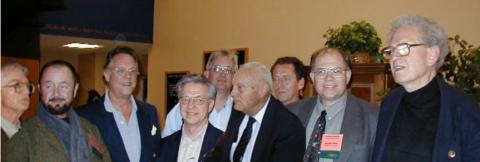
The Gold Standard faculty (l to r): Dale Graff, Ingo Swann, Stephan Schwartz, Hal Puthoff, James Spottiswoode, Edgar Evans Cayce, Henry Reed, Paul Smith, Russell Targ.
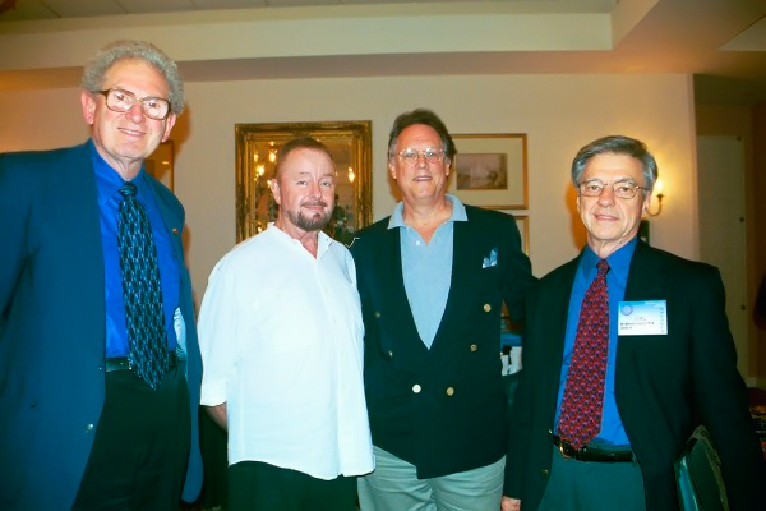
Russell Targ, Ingo Swann, Stephan Schwartz
and Hal Puthoff
As you can see immediately, particularly if you are familiar with remote viewing, or have done any reading about this subject, The Gold Standard Course offers a unique assemblage of experts to teach you what science knows about remote viewing.
I think you will see very quickly that there is nothing else like this available. To begin with you have, Hal Puthoff, Russell Targ, Ingo Swann, and myself. What everyone else talks about we created.
Now let me go through the individual 10 Video presentations:
Note: videos are available to stream online only they are not downloadable.
Video One
Hal Puthoff
The first video is a presentation by Hal Puthoff who along with Russell Targ started the SRI laboratory. The one funded by the CIA and the military. Ingo Swann was one of the first viewers in their program. Many of the RV trainers offering instruction today, learned what they know about Remote Viewing from Hal, Russ, and Ingo. So why don’t you learn it too? Much of their work until recently was highly classified, and this presentation by Hal will take you inside this once-secret program. It was the SRI Lab that created the Army’s Stargate Program, and he talks about how they began, the uses that they put remote viewing to, and you see in his presentation, and in these other presentations, rarely seen examples of the real remote viewing experiences and the problems they took on.
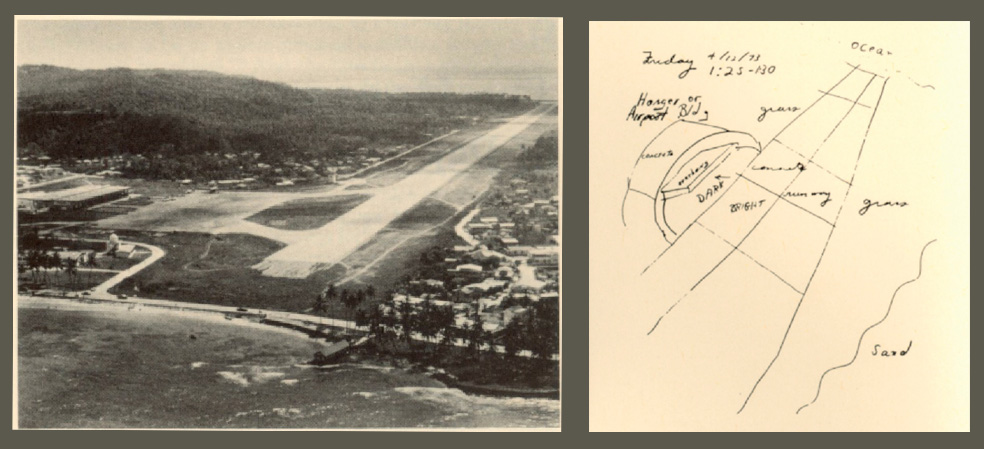
A classic early SRI “outbound” remote viewing and target.
Video Two
Paul Smith
The second video is a presentation by Major Paul Smith, USA (ret.) who was a Army intelligence officer with the U.S. Army Intelligence and Security Command, and the Defense Intelligence Agency. Paul was the chief coordinate theory instructor on CRV techniques in remote viewing at the Ft. Meade program. He is now the president of the International Remote Viewing Association, which Russ, Hal, Paul and myself founded with some others. Paul describes his experiences and program in the army that he took part in at Ft. Meade.
Video Three
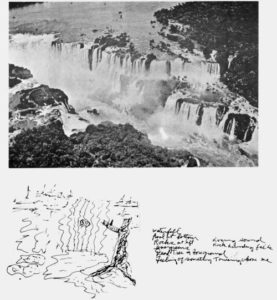
A Mobius Lab remote viewing by a woman who had just completed the training program in Opening to the Infinite.
The third video, is by myself and it talks about The Mobius Laboratory, the civilian program that ran concurrently but independently of the government program, and that carried out some of the most extraordinary experiments in remote viewing ever conducted. You will learn what we did in archeology and how we unlocked the secrets of the past; how the Mobius consensus protocol developed and how you can use yourself in practical applications remote viewing. You can do this. Here is the actual film of one of the most famous experiments in remote viewing: The challenge Mobius received from archaeologists in Egypt who did not believe in remote viewing, and who blocked our project until we passed their test: Locate a single buried building with particular characteristics in the middle hundreds of square miles of desert., an area about half the size of Los Angeles. The viewers are George McMullen and Hella Hammid. This is what happened:
Video Four
James Spottiswoode
The fourth video is James Spottiswoode’s talk about the effects produced by the earth’s biosphere. He speaks in public very infrequently. Like the presentation by Hal Puthoff, this is a rare opportunity to hear the principal expert on an important aspect of remote viewing speaking on the record. It may be the only time James is on video explaining about the Local Sidereal Time effect he discovered, and the geomagnetic field effect he confirmed. He describes the powerful influence on your remote viewing these two biosphere forces exert, and how to optimize your sessions taking them into account.
Video Five
Skip Atwater
The fifth video, is a presentation by Skip Atwater. Skip describes his experiences and how he came to connect remote viewing and the Hemi-sync sound sequences developed by my good friend, the late Robert Monroe.
Video Six
Russell Targ Co-founder of the SRI Remote Viewing program. Author of: Limitless Mind: A Guide to Remote Viewing and Transformation of Consciousness
The sixth video, is physicist Russell Targ, co-founder of the SRI Program sharing insights drawn from 40 years of remote viewing research. Russell places remote viewing in a larger context. He gives you a perspective for thinking about remote viewing, its role, its place in physics, and its place in a number of spiritual paths.
This sense of context is very important. There is a tendency in remote viewing to become obsessive about a particular technique to the point where the larger context is lost. Russell grounds remote viewing in the larger world of ethnohistorical spiritual paths and modern physics.
Video Seven
Dale Graff
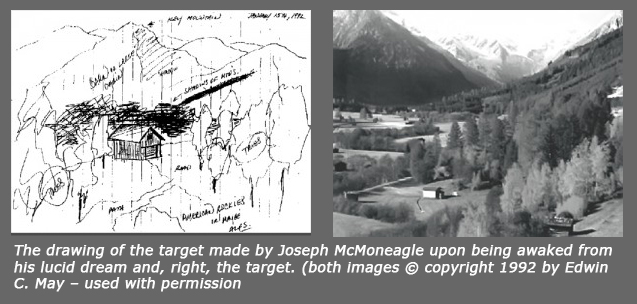
The seventh video by Dale Graff, who was the contract manager for the SRI-CIA program, presents research about remote viewing and dreams. You may not immediately associate dreaming with remote viewing but, as Dale explains it can be a very effective marriage, and he explains exactly how to achieve this.
Take a look at this experiment done by Ed May, PhD who ran the government laboratory longer than anyone, who was my research partner in carrying out one of my most famous research projects — The Deep Quest submarine experiments, which are described in Opening to the Infinite.
Video Eight
Henry Reed
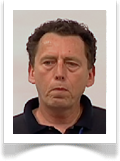
The eighth video has two tracks. The first is by Henry Reed, a visionary psychologist who continues Dale’s theme about dreaming, showing you how to adapt the ancient dream techniques from the ancient healing temple of Aesculapius. In his presentation, Henry gives you very specific techniques for working with dreaming and remote viewing so that you can begin to utilize this part of your consciousness to get specific answers to questions that trouble you. I discuss both Henry and Dale’s technique at length in Opening to the Infinite, and walk you through how to have these kinds of dream experiences.
Edgar Evans Cayce
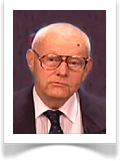
The second presentation is by Edgar Evans Cayce, the only living son of one of the greatest remote viewers in history, Edgar Cayce. Edgar Evans talks about his father’s remote viewing and I think this may be the only time he has ever spoken of Edgar Cayce’s remarkable remote viewing abilities.
Video Nine
Ingo Swann
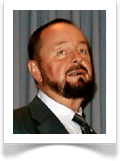
The ninth video, is a presentation by Ingo Swann, Ingo is an artist in New York and one of the greatest remote viewers we have ever seen; he coined the term remote viewing, and he discusses his 40 years of work as a remote viewer and the insights he has derived from it.
Video Ten
The tenth video is myself again, and this time I deal with the implications of remote viewing, the power that remote viewing confers on individuals, and how individuals and small groups can use this aspect of the self to change history in very specific ways.
Some Comments From Someone Who Has Used The Gold Standard Course Training
I have read about and followed for many years thoughtful and rigorous study on psychic phenomena and consciousness. This program is the BEST that has ever been created. Nothing comes close. The value, dollar for dollar, has no equal. Anyone interested in this subject MUST see this.
The program will take you through the experiments just as if you were there live. Everything you need to experience it first hand is here – all the instruction, experiments and forms. It is exactly what you would experience if you were right in the remote viewing laboratory.
And the people conducting the experiments and instructions are simply the BEST IN THE WORLD. Forget going to college or lectures: this is the equivalent of a degree in remote viewing.
And by the way, the quality of the production is sheer excellence. I felt like I was watching a network broadcast.
~Porter Briggs
President
A Briggs & Co.
Five Experiential Audio Recordings
After the 10 streaming videos, there are 5 audio recordings that can be downloaded or streamed online. They can each be used entirely on their own. However, I recommend you first read about the audio recordings in Opening to the Infinite, where I have provided complementary material to further deepen your understanding and competence with every aspect of remote viewing. Each experience is about 45 minutes and I guide you through it. Each puts you in touch with a different way of accessing your own nonlocal awareness.
Before the Beginning
 The first audio recording is Before the Beginning. It is an adaptation of laboratory visualization techniques, combined with a very specific form of intention remote viewing. This experience takes you back to the moment when you decided to be you before you were incarnate before you were in your body. You can talk to yourself at that moment, and gain insight into the purpose of your life. Why are you here. What you want your life to be about. What should you be doing.
Harmonic Healing
 The second audio recording is called Harmonic Healing and it is a special technique adapted from both the remote viewing and therapeutic intention research. It takes you through an experience in which you stimulate your own immune system, bringing self-healing to your body.
Meditation for Modern Minds
 The third audio recording is called Meditation for Modern Minds. Among many other benefits, meditation teaches you focus. And the success of opening to the transcendental part of yourself is strongly affected by your ability to focus. Regular practice of meditation has also been scientifically proven to change your brain chemistry, lower blood pressure, make you sleep better, feel less stressed and much more. The difficulty for most people living in today’s modern world is that traditional meditation methods were developed in an age very different to today’s fast-paced rhythm.
Remote Viewing
 The fourth audio recording called Remote Viewing, explains exactly how to do remote viewings, giving you an overview of the various protocols so that they become easy and familiar to you.
The first track describes remote viewing as an experience so that you will know what to expect.
The second track describes in detail how to do a remote viewing, taking you through it step-by-step
The third track is about targets, how to select them what are good targets, what are bad targets. The fourth one describes when to do your sessions, incorporating the biosphere influences which can make so much difference.
The fifth track teaches you various the protocols that you can use, all the various techniques, both in terms of laboratory work and in terms of applied work.
The sixth is about judging and analysis so that you can derive a deep understanding of your own accuracy when you do your sessions and over time discover what things are you particularly good at, how reliable you are about certain things, how good you are at getting colors for instance, or geometric forms.
The seventh track deals exclusively with feedback, why it is important, how to give it, what to avoid, when to give it.
The eighth track deals with problems that arise in remote viewing and how to deal with them, what it is you can do to accomplish a more successful remote viewing session.
The ninth track deals with meditation. Meditation, we have learned over the years, is the strongest predictor of being successful at remote viewing. People who meditate do better than people who don’t. It’s as simple as that, and the ninth track gives you a specific meditation technique particularly adapted for remote viewing and walks you through it.
The tenth track deals with a location protocol,
The eleventh track takes you through an object protocol describing objects that are hidden from you by reason of space or time.
The twelfth track gives you the specifics of the outbound protocol. Someone hides somewhere and the viewer describes where they have hidden; it is one of the most popular ways of doing remote viewing, and was the protocol I chose for the first Associated Remote Viewing experiments. Here is the first ARV, which was used to win a horse race at Hollywood Park in Los Angeles.
This track guides you through the experience so you can know what it is like to obtain information from the future — to experience consciousness unlimited by space or time.
The thirteenth track takes you into the world of intuitive diagnosis and allows you and a partner to demonstrate to yourselves your ability to scan another person’s body and see where they have suffered illness or trauma.
Keeping Records
This collection of documents is designed to be used with your computer. It contains all of the forms, all of the paperwork, all the things that you need to record your remote viewing session just as we did in the Mobius laboratory. You can print them out as you need them to maintain a complete record of your sessions opening to the part of yourself not limited by space or time.
Bonus Download Only File:
You will also receive the bonus track 2050 (Downloadable MP3 file). 2050 is an experiment begun in 1978 in which men and women like yourself were asked to go forward in time to the year 2050, to describe what the world is like then. You will have the opportunity to participate in this experiment by sending us your impressions. The form for recording your impressions can be found in Keeping Records.
So there you have The Gold Standard Course. 10 videos, 5 Audio Recordings, and my book Opening to the Infinite, the fourth book I have written on this subject and it was the book that I put together specifically so that it could be used as a manual. It contains not only the information found in the videos and audio recordings in written form, but it also contains very specific instructions to help you walk through every aspect of remote viewing. Taken together, the 10 videos and the 5 audio recordings and the book will give you the finest course in remote viewing that is available today.
How good can you get? That is impossible for me to say, the ability to remote view is like any human ability, spread through the population in what we in science call a bell curve — because it looks something like a bell. At one end are people truly gifted, at the other are people who either cannot or will not give themselves permission to experience this part of themselves. Most of us fall somewhere in the middle. I can’t say whether you will become the Tiger Woods of remote viewing, but I can say that if you follow the course you will have successes that will surprise you.
To give you a sense of what I mean here are the results that occurred when 47 people who had just taken the Gold Standard Course decided they wanted to go looking for Saddam Hussein, who was then in hiding. These were people just like you, who had gotten interested in remote viewing, opening to the part of themselves not limited by space and time.
Saddam Hussein Remote Viewing Experiment
The Drone
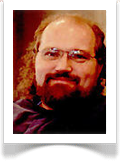
Harold Moses
Now, I want to say one final thing about the Drone, which is the sound that you will hear in the background on the audio recordings. This is a particular cycle acoustic tone; I have selected it with great care. It was developed by Dr. Harold Grandstaff Moses and, at first, may seem deceptively simple; it’s just a tone.
People often ask me, well why don’t you have beats in your background sound, or why don’t you have other subliminal things going on it. And the answer is because I don’t want to cloud the power of this tone or to confuse your mind with anything that would make your sessions less than optimal. If you are processing subliminal messages you are not fully able to open to the nonlocal aspect of your consciousness.
The Drone creates the context space, the sacred space if you will, for opening to nonlocal awareness more clearly, and more quickly, and more deeply than anything else that I have found. If I thought there was something better to put behind your sessions, I would have used that; but in years of doing this kind of research, the Drone, it seems to me, has over time produced higher performance levels and has created the space for people to have these kinds of experiences in a unique and powerful way.
Dr. Andrew Weil’s view of The Drone:
“Powerful psycho-acoustic technology. I recommend trying it.”
So, that’s The Gold Standard Course, and I hope you will consider it. If you are interested in remote viewing, there is nothing that I could recommend that would be better than this. This is not only my view, but the view as you have seen of the world’s leading authorities on this subject. I have put it together for you so that you can use it easily, step-by-step; and I am assured and I can assure you that if you go through The Gold Standard Course, you will be able to express your maximum ability remote viewing.
Thank you.

Premium Online Course $218.85
- Access everything in one complete online member area
- Unlimited Streaming Access to All 10 Remote Viewing Videos (the videos cannot be downloaded)
- Unlimited Streaming and Download Access to All 4 Remote Viewing Albums, plus “Keeping Records”. Listen online or download to your computer or laptop and sync to your mobile devices.
- Opening to the Infinite the book in downloadable PDF and Kindle formats
- Bonus Audio Track 2050 – an experiment that I have been running since 1978 called 2050 in which you go forward in time to the year 2050, to see what the world is like then.
For your security, all orders are processed on PayPal’s secured servers.